
Plumeria-Frangipani
Plumeria, the quintessential exotic plant of Palermo
Plumeria rubra L. is a species belonging to the Apocynaceae family, described by Linnaeus in 1753. It is a small ornamental tree, widely cultivated in tropical and subtropical regions.
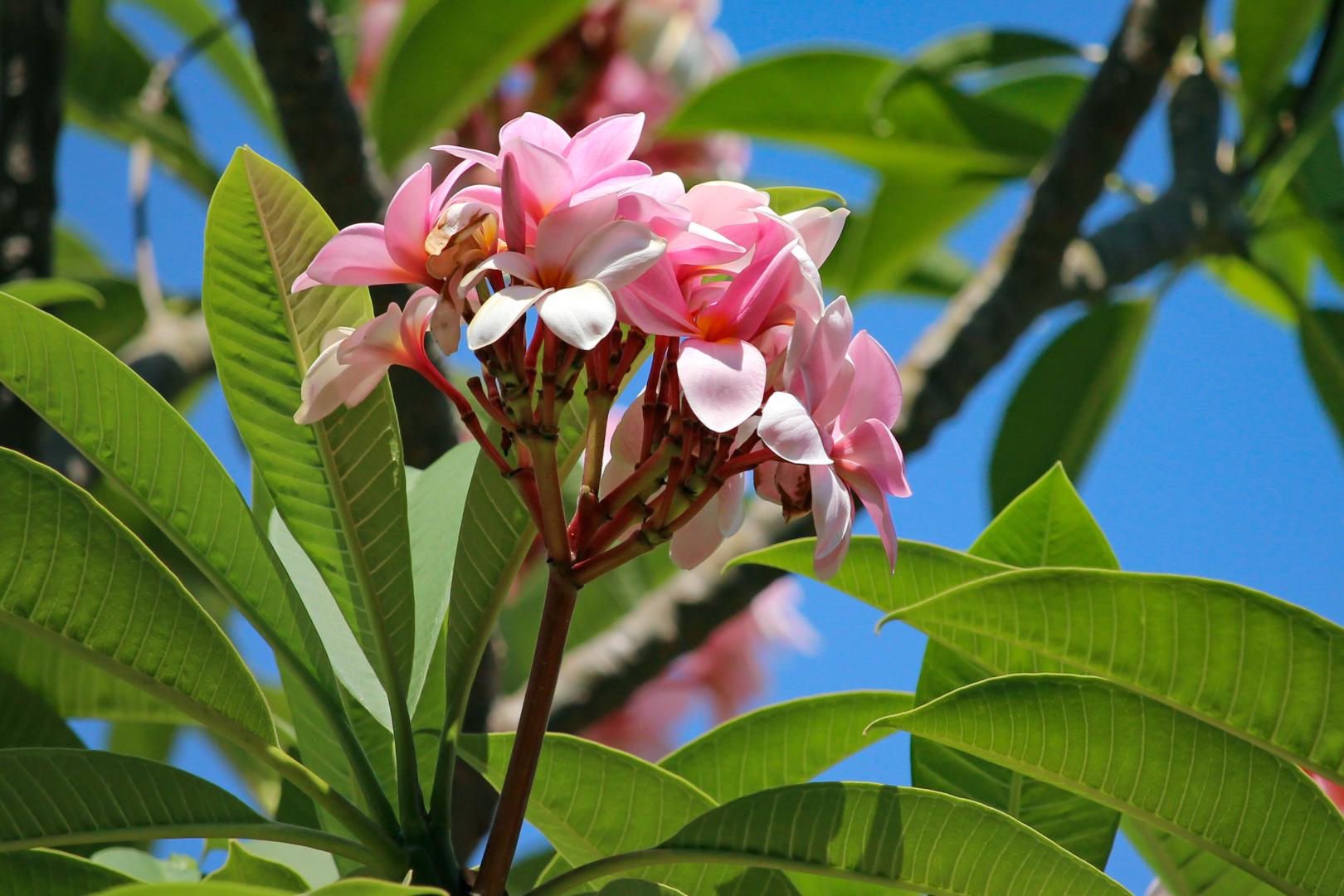
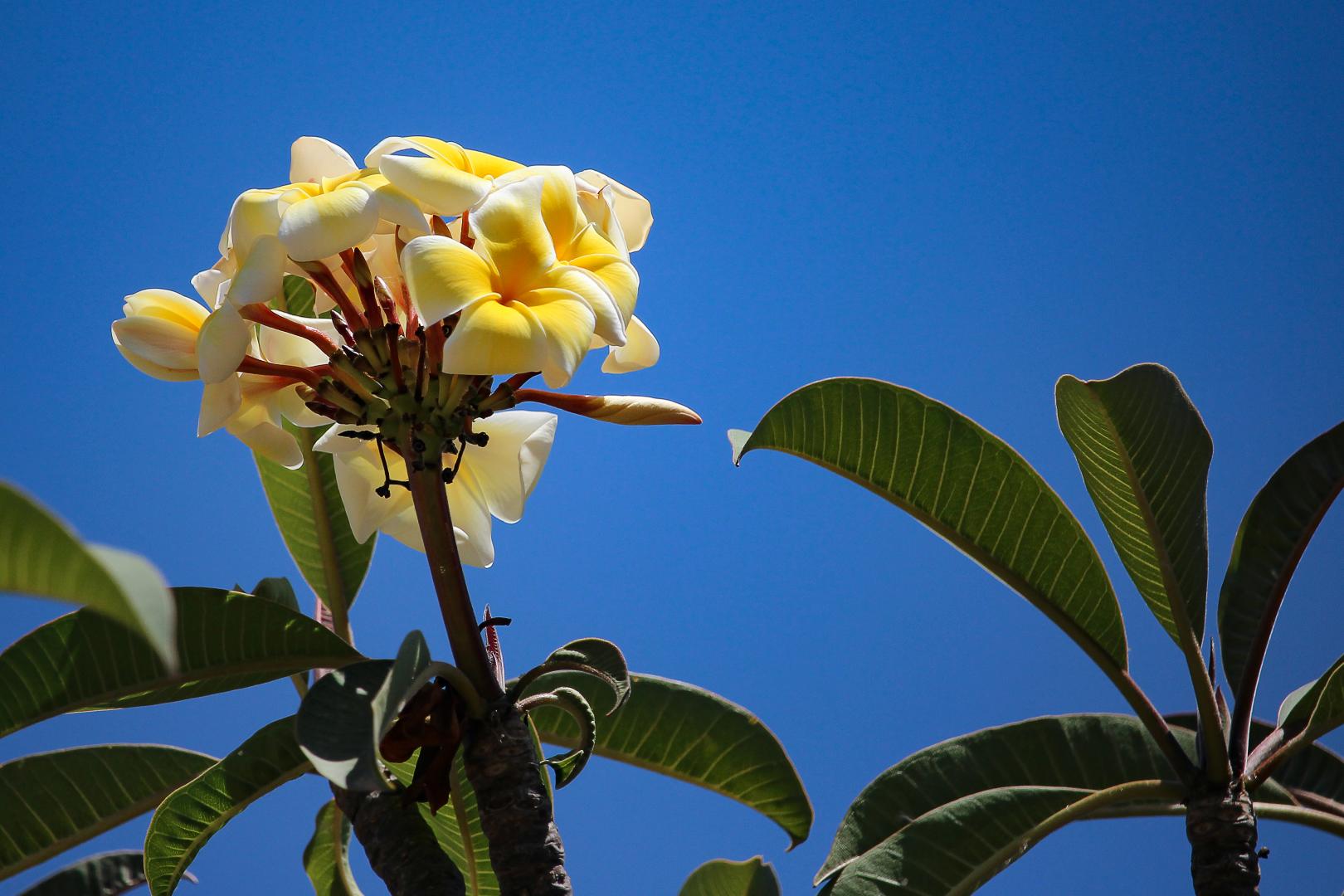
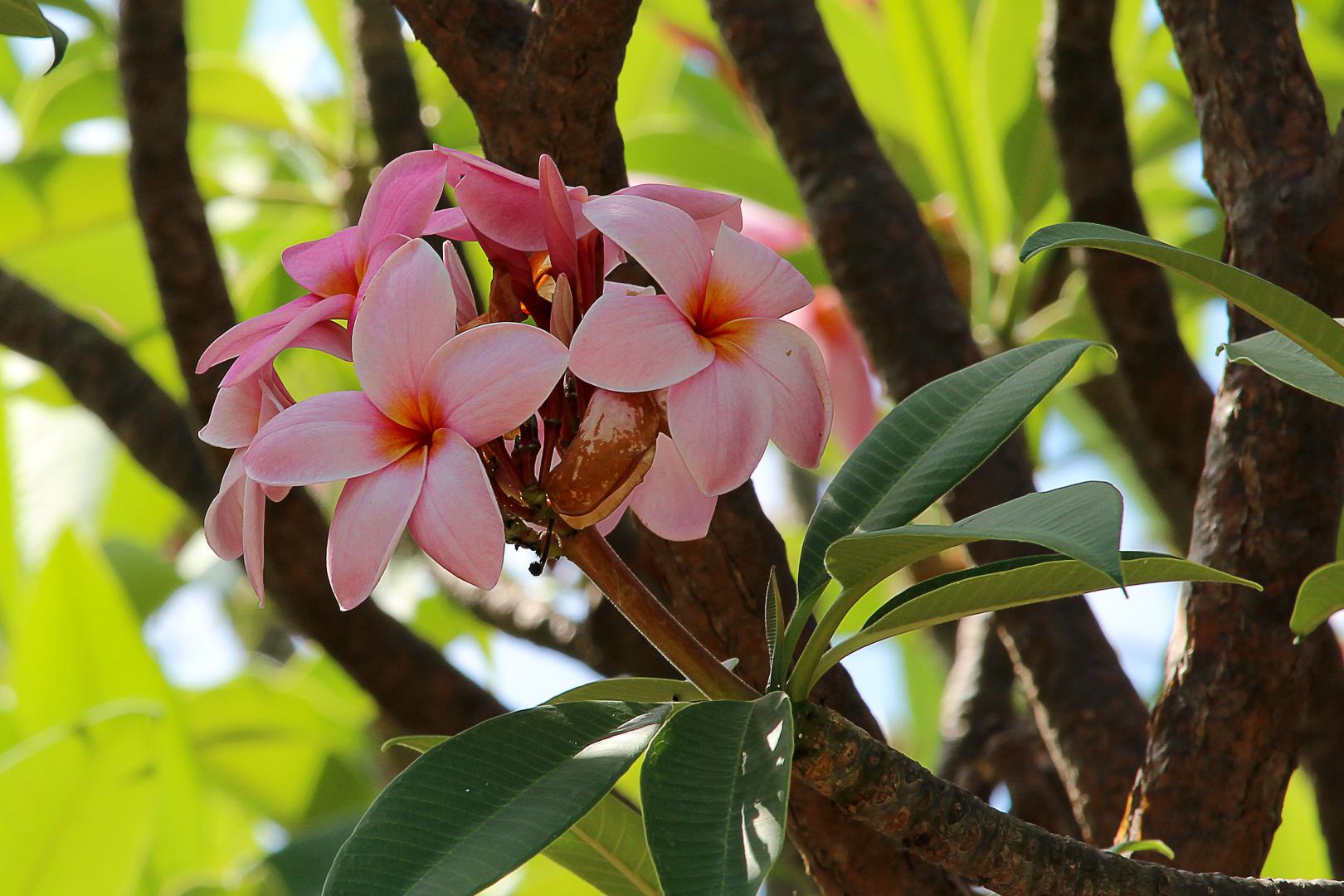
The plant is striking for its light foliage and the “sculptural” architecture of its branches: the stems and branches are large and fleshy, with leaves concentrated towards the ends of the branches. When the branches are cut or broken, the plant can emit a white latex, a milky sap that is irritating and moderately toxic, typical of many Apocynaceae.
The leaves are large (usually very long and leathery) and deciduous: in the cooler months, they can fall off, leaving the plant bare.
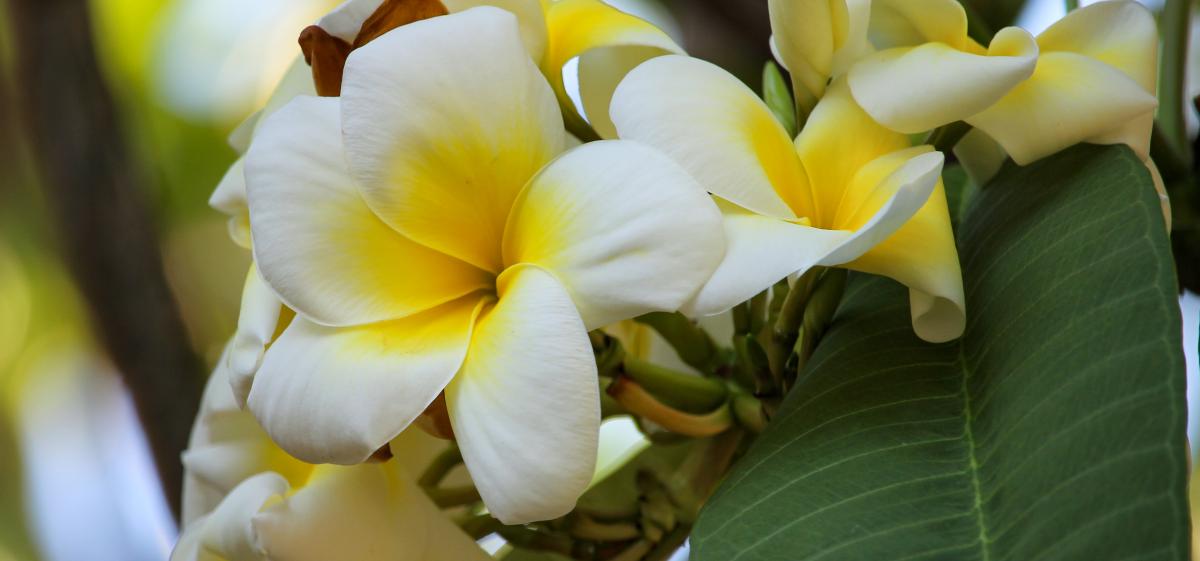
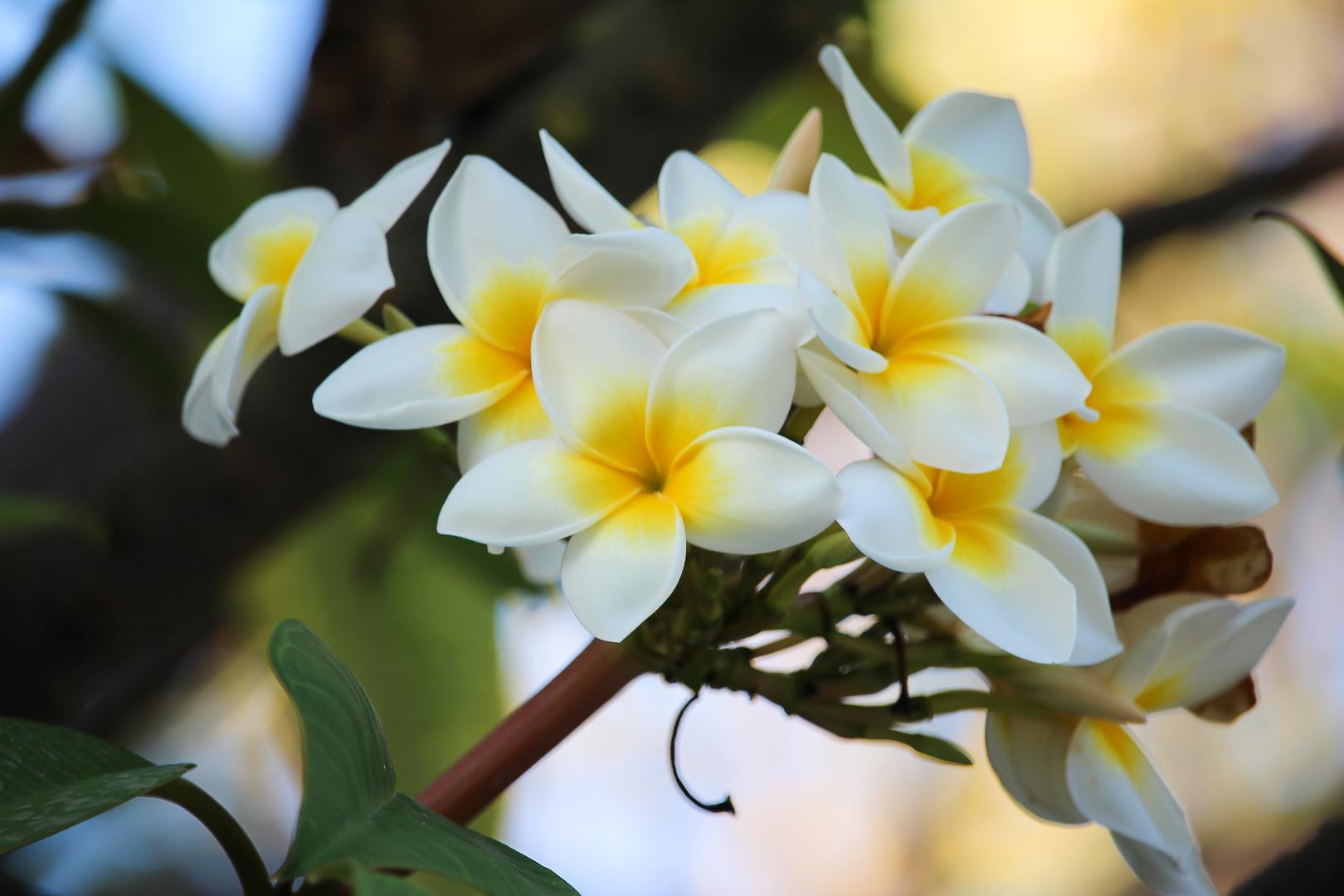
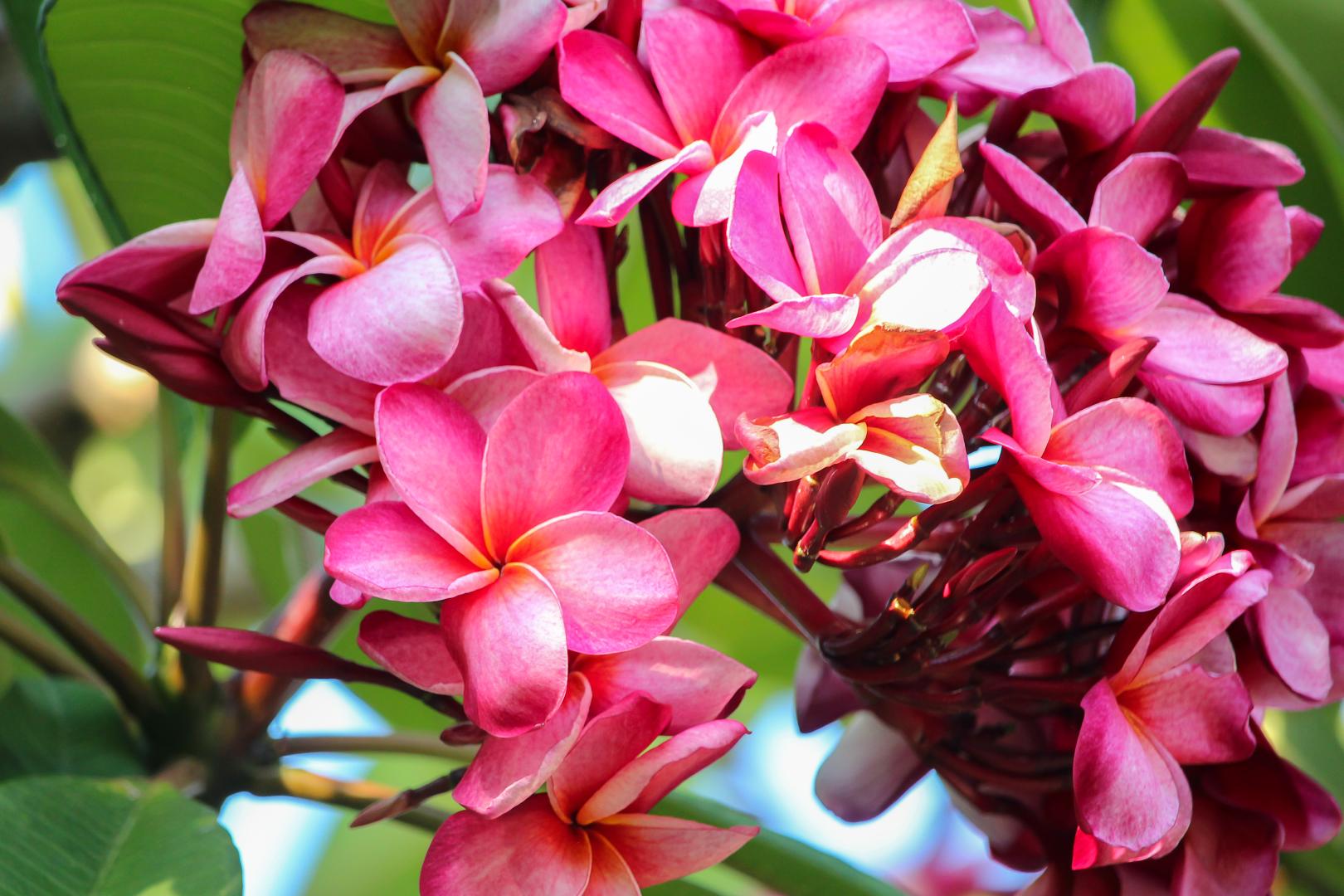
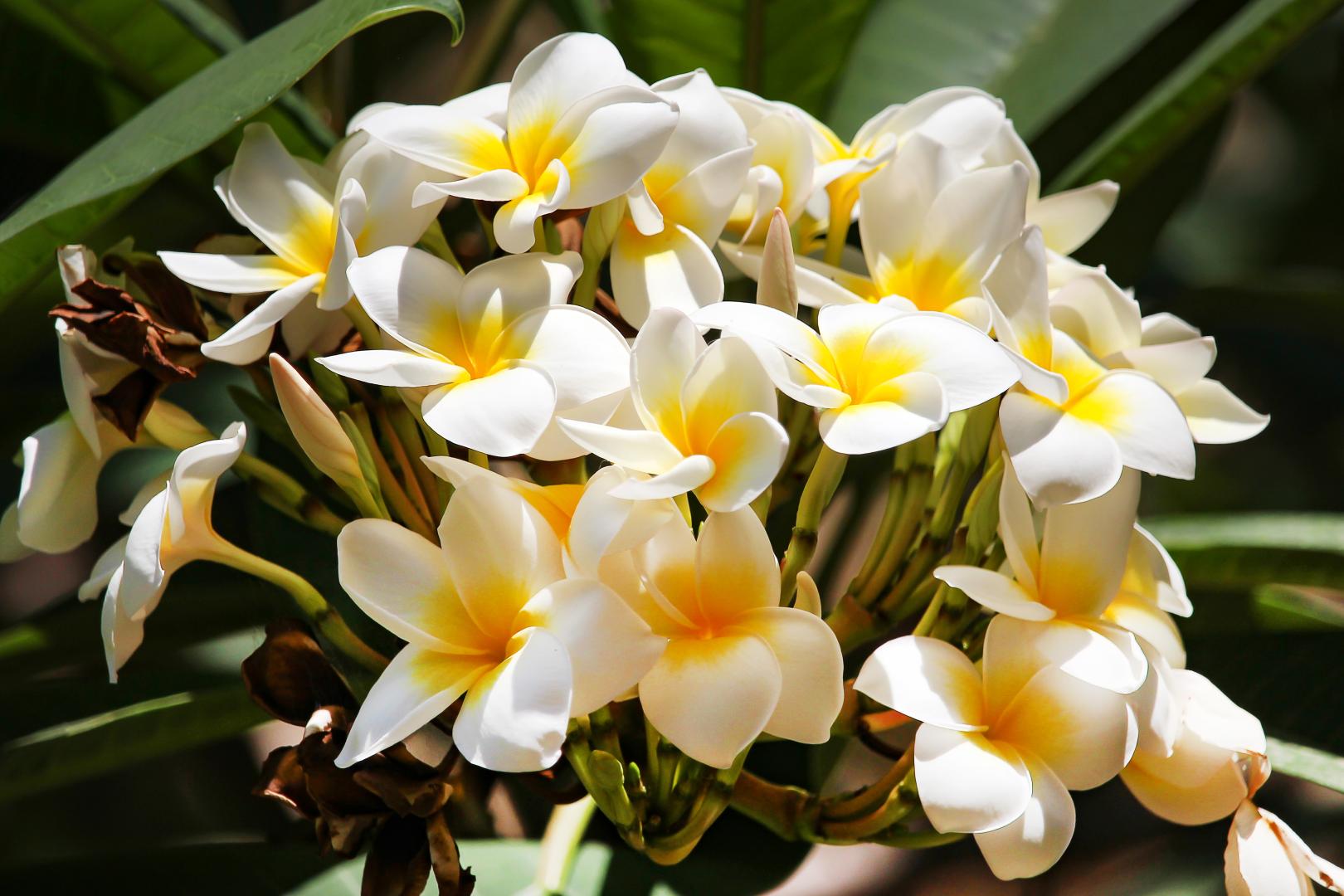
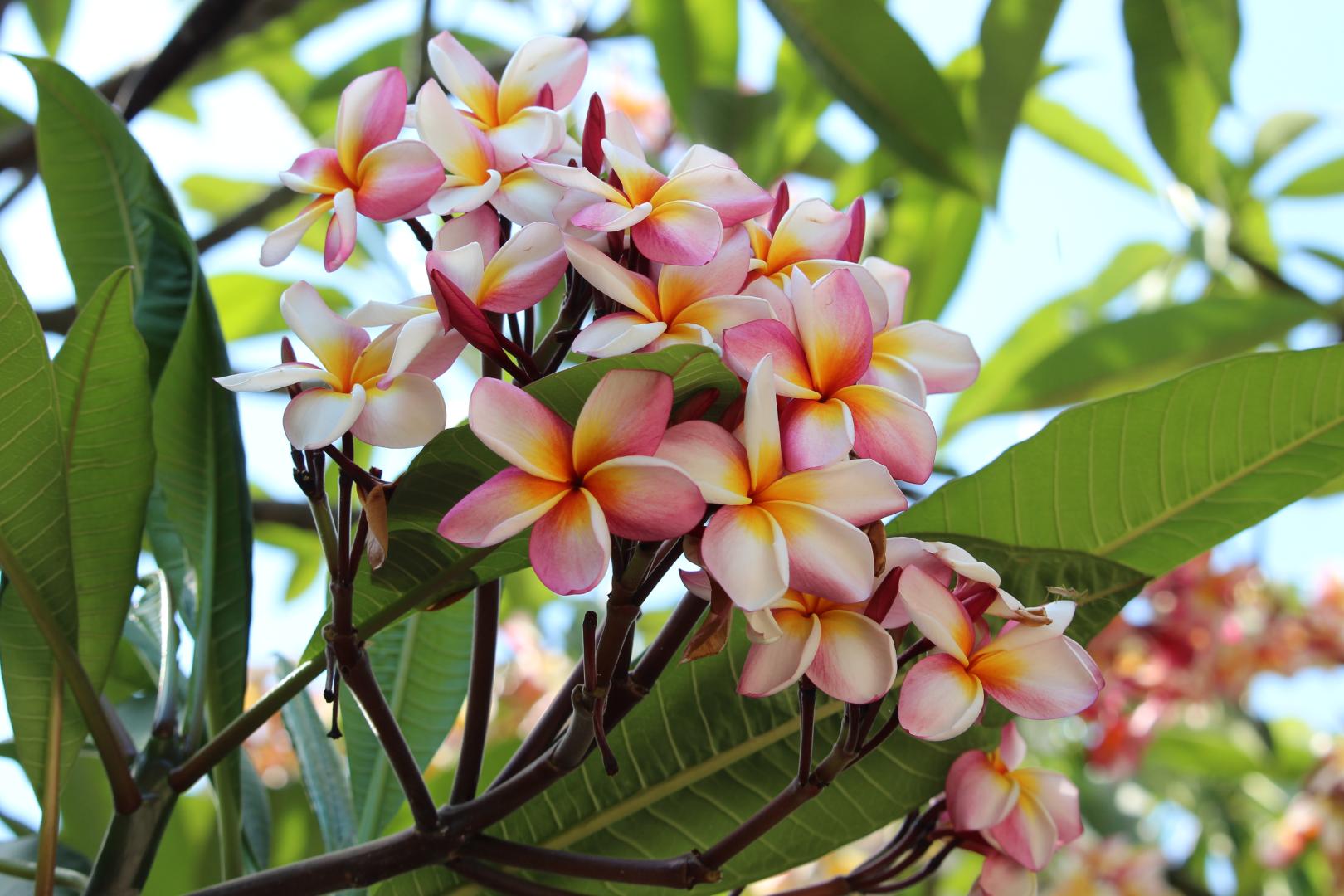
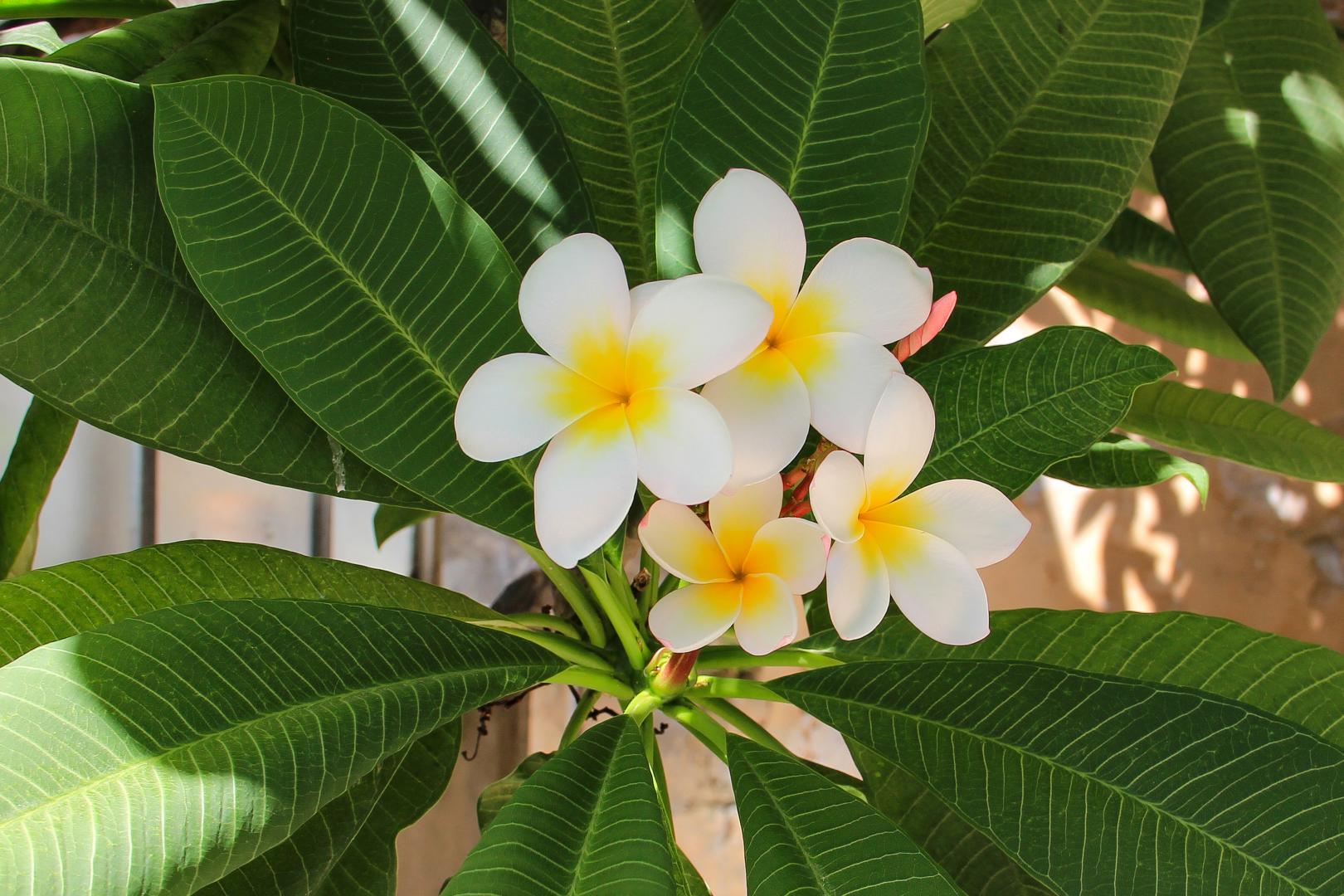
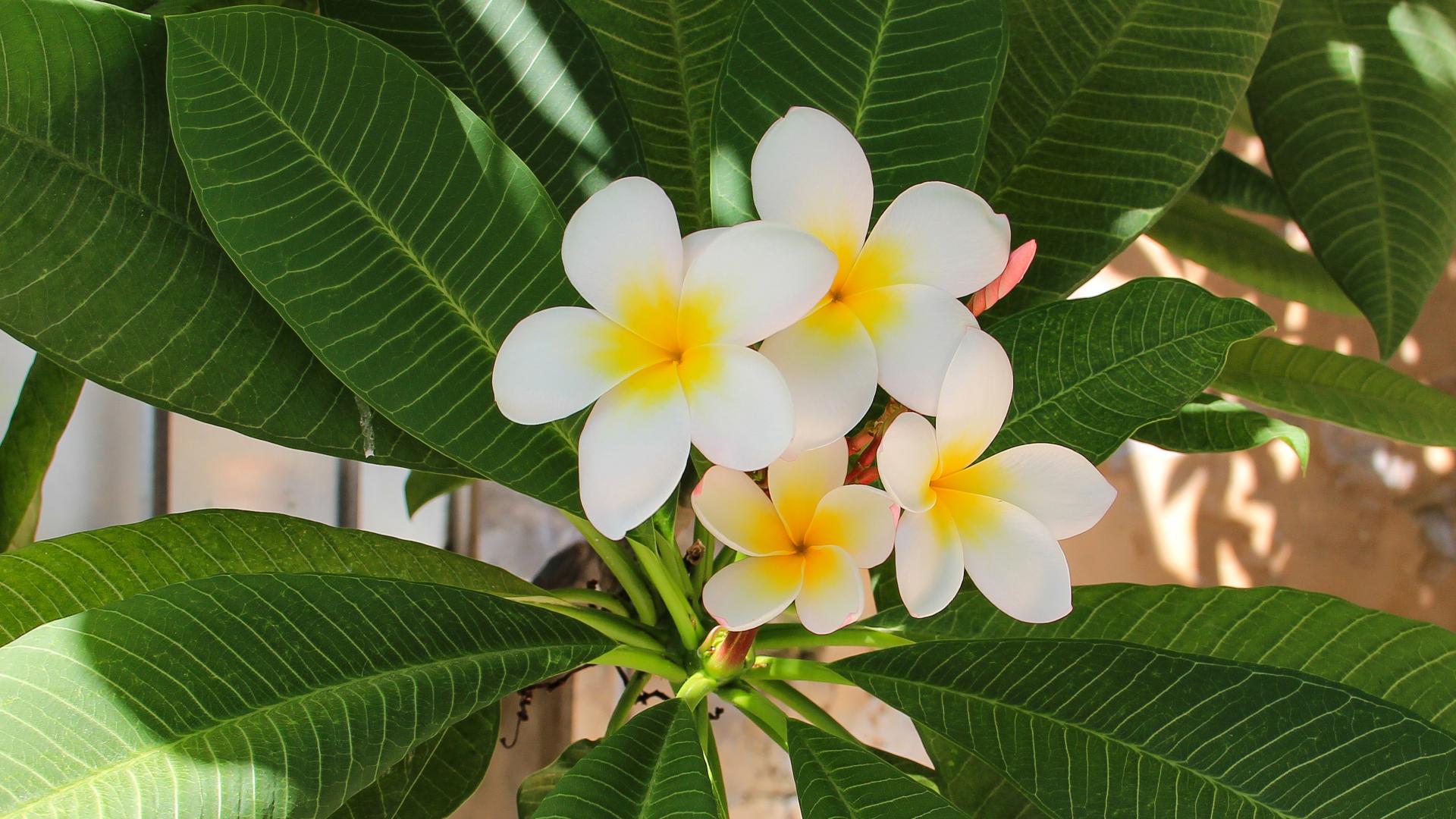
The flowers, gathered in terminal inflorescences, are the most recognisable feature: large, waxy, intensely fragrant, with variable colours (from white to pink, to combinations with yellow in the centre).
Flowering occurs in the warm months: in cultivation, it can last a long time, from summer to autumn (June to November), and in warm environments, it can begin as early as late spring.
From an ecological point of view, plumeria is often cited as an example of “rewardless/deceptive pollination”: the flowers emit attractive signals — especially intense scents and, in some species/contexts, visual and morphological characteristics compatible with pollination by nocturnal lepidoptera (sphinx moths) — while producing little or no nectar. Insects visit the flowers in search of a reward and, during their exploration, may transfer pollen between flowers, enabling pollination even in the absence of nectar.
Origin and distribution
The native range of Plumeria rubra extends from Mexico to Venezuela, particularly in seasonally dry tropical biomes; the species is also widely introduced and cultivated in many regions of the world. This widespread ornamental use explains its presence in historic Mediterranean gardens: P. rubra is valued for its drought tolerance and intensely fragrant flowers.
Globally, the species is classified as “Least Concern (LC)” on the IUCN Red List. This indicates that, based on IUCN criteria, the species is not currently considered to be at significant risk of extinction on a global scale. The IUCN Red List is an international assessment system that classifies species into risk categories based on parameters such as distribution, population trends and threats.
The connection with Palermo: from exotic to urban symbol
It was introduced to Palermo in 1821, at the ancient Boccadifalco Botanical Garden: a step that helps connect the city's history with that of botanical collections and the acclimatisation of exotic species.
In Palermo, Plumeria rubra is so much at home that it is commonly called pomelia and recognised as the city's symbolic flowering plant.
This connection is not only emotional or scenic: our Botanical Garden documents a veritable thematic collection in the open ground, with about thirty specimens, making the pomelia an element of identity from a scientific and museum point of view as well.