

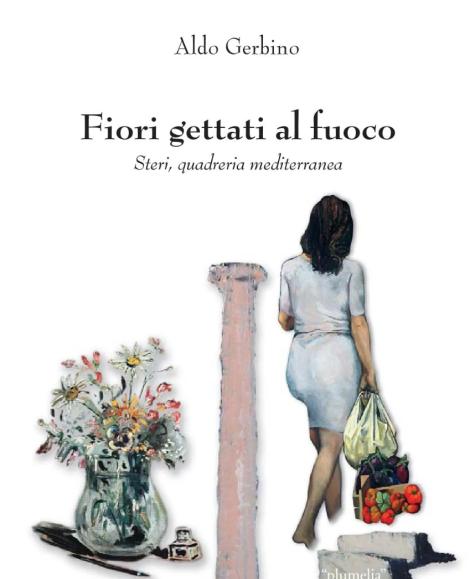
Fiori gettati al fuoco - Steri, Quadreria Mediterranea
Lorem ipsum dolor sit amet, consectetur adipiscing elit. Quisque faucibus, risus vel vehicula interdum, nibh tellus interdum nisl, sit amet convallis nisl felis ut risus. Etiam interdum sem at leo feugiat vestibulum et malesuada dui. Vestibulum molestie lorem et tellus fringilla, at tempus sem hendrerit. Ut mi arcu, laoreet ac leo in, hendrerit mollis orci. Suspendisse potenti. Vivamus non fringilla lectus. Suspendisse auctor finibus feugiat. Lorem ipsum dolor sit amet, consectetur adipiscing elit. Pellentesque vestibulum libero at odio fringilla, non sodales urna malesuada. Curabitur sodales cursus iaculis.
Lorem ipsum dolor sit amet, consectetur adipiscing elit. Quisque faucibus, risus vel vehicula interdum, nibh tellus interdum nisl, sit amet convallis nisl felis ut risus. Etiam interdum sem at leo feugiat vestibulum et malesuada dui. Vestibulum molestie lorem et tellus fringilla, at tempus sem hendrerit. Ut mi arcu, laoreet ac leo in, hendrerit mollis orci. Suspendisse potenti. Vivamus non fringilla lectus. Suspendisse auctor finibus feugiat. Lorem ipsum dolor sit amet, consectetur adipiscing elit. Pellentesque vestibulum libero at odio fringilla, non sodales urna malesuada. Curabitur sodales cursus iaculis.
The “Quadreria Mediterranea” of the Steri Monumental Complex constitutes that sober ‘diffuse’ patrimony of contemporary art distributed, over time, in various rooms of Palazzo Chiaromonte (the ancient and disturbing seat of the Inquisition), with works acquired in the decades of the past century up to the most recent donations. They characterize, even in the randomness of aesthetics, evolutionary indicators of a painting matured in the Mediterranean sphere, with a focal point of the highest level, such as, La Vucciria by Renato Guttuso, moved from the Sala delle Armi to the Sala Magna of the Rectorate. Works, these, that dialogue with the Guttusian bearing: now by virtue of artists linked, like Nino Garajo, by deep friendship with the Bagherese Master, and, more generally with works gathered, selected and exhibited here, in which prestigious authors unequivocally offer their views on the persistence and consistency of the Mediterranean idea. Thus, from the pictorial and intellectual magisterium of Filippo de Pisis, the incomparable “botanical flâneur,” one transits with his C'est n'est pas tout to Ottone Rosai, Papini's friend formed in the atmosphere of the ‘Voce’ and “Valori Plastici”; and again: from Giovanni Omiccioli, a lucid exponent of the “Roman School” (signatory with Guttuso and Mafai of the first masthead of the “Unità”), to Sebastiano Milluzzo, up to the emotive realism of Vaquero or the agile engraving of Cordio, to flow, then, with the other variegated creative imprints agents in our contemporaneity.