
Grapefruit
Grapefruit: a cross between sweet orange and pomelo
Grapefruit (Citrus × paradisi) is an evergreen tree of the Citrus genus. The “×” sign indicates that it probably appeared as a natural hybrid and was then selected for cultivation. It is considered a cross between sweet orange (Citrus sinensis) and pomelo/pummelo (Citrus maxima).
It is a tree that can grow up to 15 m tall, with a broad, dense canopy. The branches can be relatively thornless (or almost thornless in some cultivated forms).
The leaves are ovoid, glossy, robust and partly leathery, dark green in colour, with a slightly incised margin; the petiole is winged, with wings sometimes up to about one-third of the leaf's width.
The flowers, white and fragrant, single or in clusters, are generally 4–5 cm in diameter and have a white corolla.
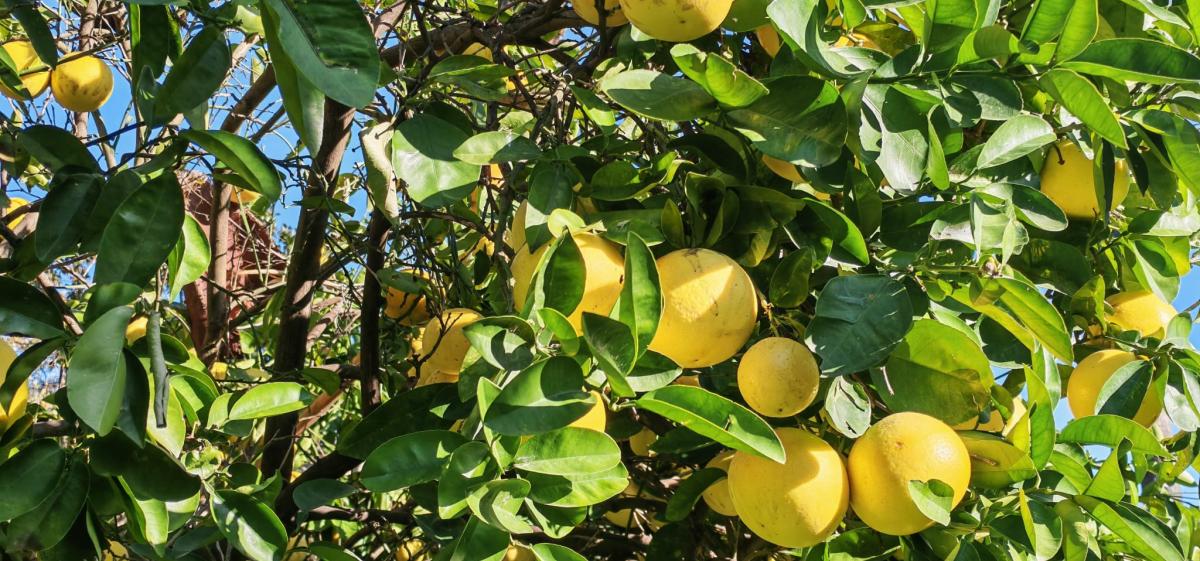
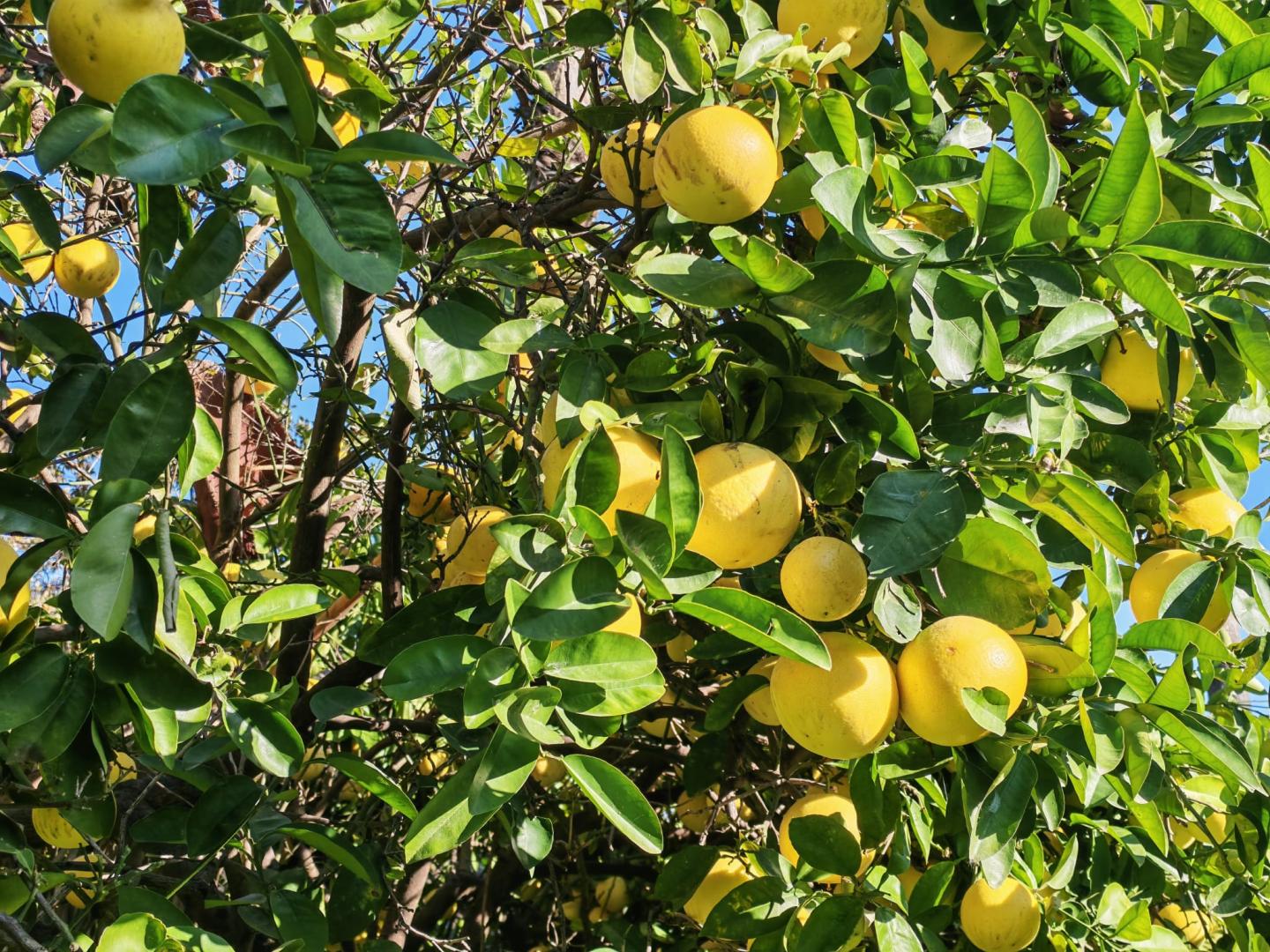
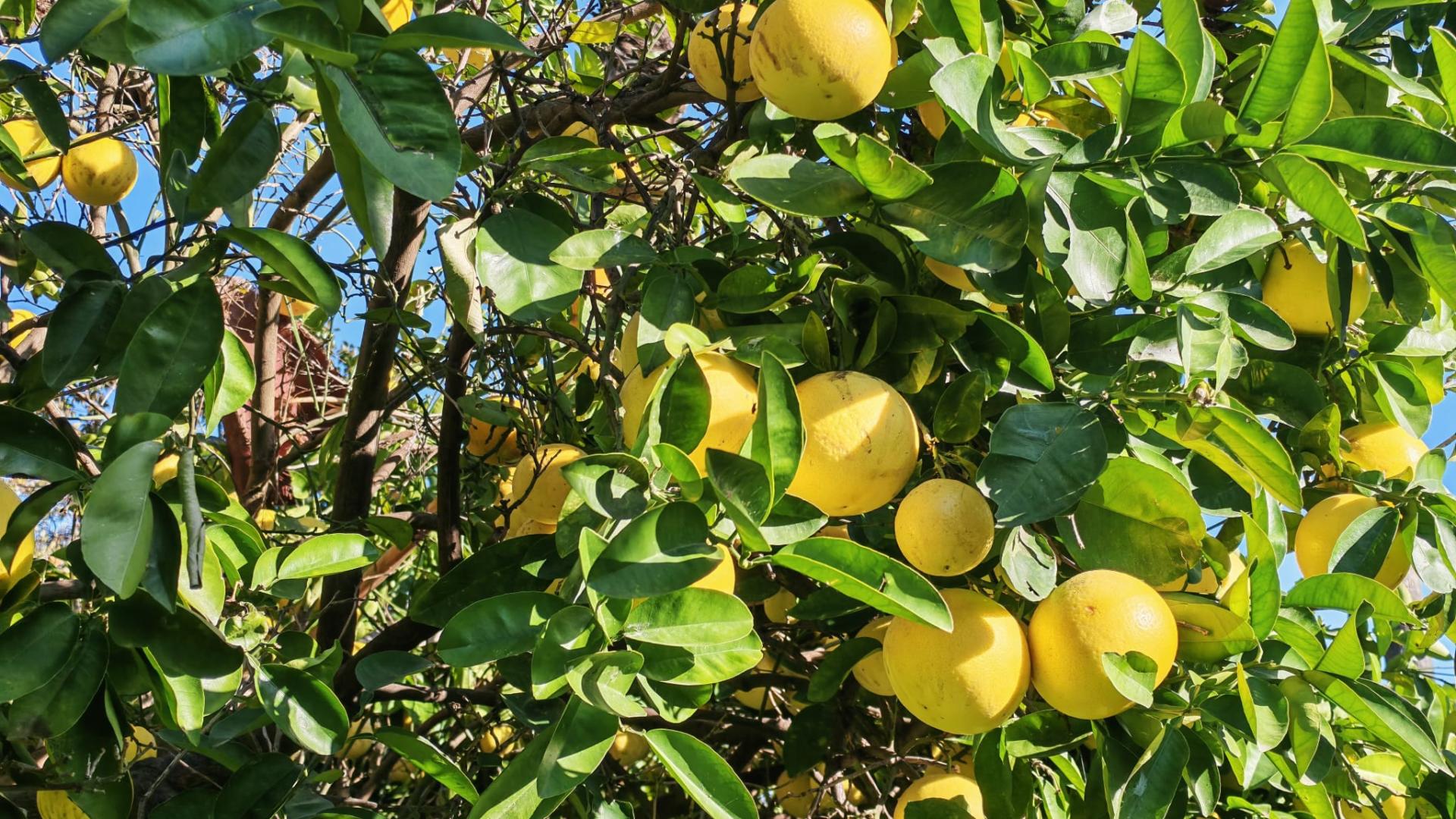
The fruit is a large hesperidium, often ovoid or pear-shaped, with a diameter generally 8–15 cm. The relatively thin skin, rich in aromatic glands, can be markedly bitter. The flesh is very juicy, pale yellow to pink in colour (up to more intense shades in some selections). The flavour is between sweet and bitter with a sour component.
Grapefruit contains flavonoids, among which naringin is particularly important, a glycoside responsible for the typical bitter taste.
In varieties with pink/red flesh, the colour is linked to carotenoids (including lycopene and beta-carotene).
Grapefruit also contains bergamottin, a furanocoumarin known for interfering with the metabolism of certain drugs (the so-called “grapefruit effect”). For this reason, people undergoing treatment should consult their doctor or pharmacist before consuming grapefruit regularly, especially in the form of juice.
Origin and distribution
It is believed that grapefruit originated from a natural crossbreeding in the West Indies, with the first historical reports linked to Barbados (around 1750) and later Jamaica (late 18th century).
The name “grapefruit” is documented in the early 19th century. During the 19th century, the crop was introduced to Florida, and commercial cultivation began in the United States in 1880.
Food uses
Grapefruit is popular as a breakfast fruit, eaten fresh or juiced. It has a high vitamin C content and, compared to other citrus fruits, has the advantage of keeping well. It is also used in jams and other processed products, where the balance between bitter and sweet becomes a characteristic aromatic component.
Production and cultivated varieties
Internationally, the main producers include the USA (historically Florida and Texas) and Israel, followed by other countries with a tradition of citrus cultivation.
Varietal selection has given rise to many forms: in addition to yellow-fleshed grapefruit, pink/red-fleshed cultivars are also widespread.
Among the commercially known varieties, “Duncan”, “White Marsh” and “Marsh Seedless” (seedless) are often mentioned. There is also a cross between grapefruit and mandarin, known as “Tangellos”.
Palermo and the historic citrus landscape
Palermo has historically been linked to citrus fruits through the landscape of the Conca d'Oro, where irrigated gardens and specialised crops have built a true agricultural and cultural identity over the centuries. In this context, the grapefruit, which is more “recent” than the orange and lemon, nevertheless finds ideal conditions: it can be found in private gardens, in peri-urban plantations and, above all, in collections.
At the Botanical Garden of Palermo, the grapefruit is part of the story of the diversity of the Citrus genus: it is a species/hybrid that is perfect for showing the public how, alongside the “classic” species, the history of citrus fruits is also made up of hybridisations, selections and varieties with fruits that differ in shape, colour and flavour.
In real life, you can observe diagnostic details such as the winged petiole, the white flowers clustered in bunches and the hesperidia that change colour from yellow to pink depending on the variety.